


Herringbone and parquet flooring fitter in Twickenham and London
Alex fits herringbone and parquet flooring across Twickenham and London, setting every block from a true centre line so the pattern runs straight.
9.97/10 from 118 Checkatrade reviews (opens in a new tab)Herringbone flooring with Alex
Herringbone is a parquet pattern. Parquet is the general name for a floor laid in a geometric pattern, and in herringbone the short, rectangular blocks meet end to side, so each row steps across the room in a zig-zag of Vs.
It is made in wood, LVT (luxury vinyl tile) and laminate, and Alex fits all three. Every block meets its neighbour at a right angle, so a poor base or a crooked start shows across the whole room. Send Alex photos of the room and he'll suggest a block size and layout.
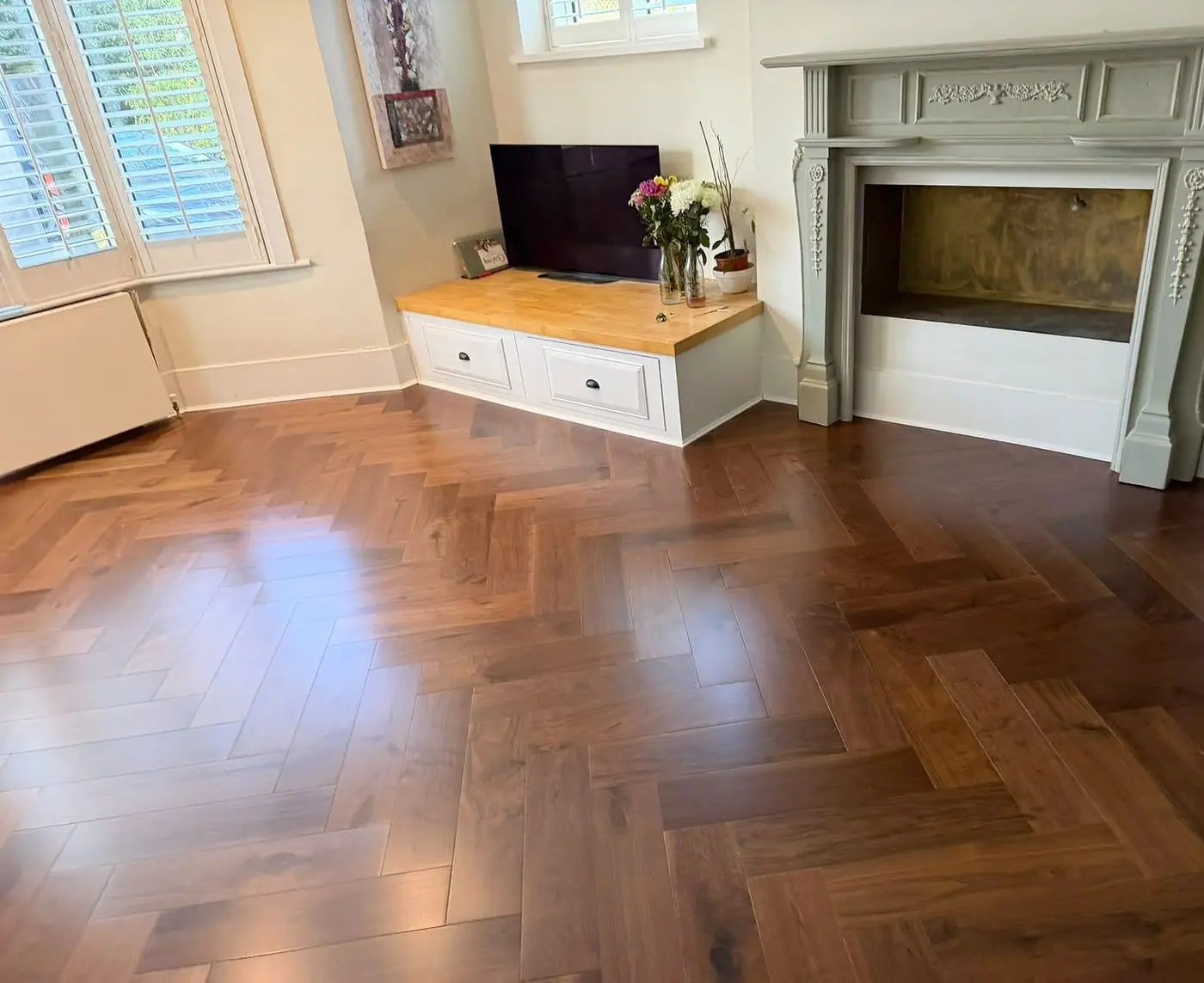
Walnut herringbone in a living room with a fireplace 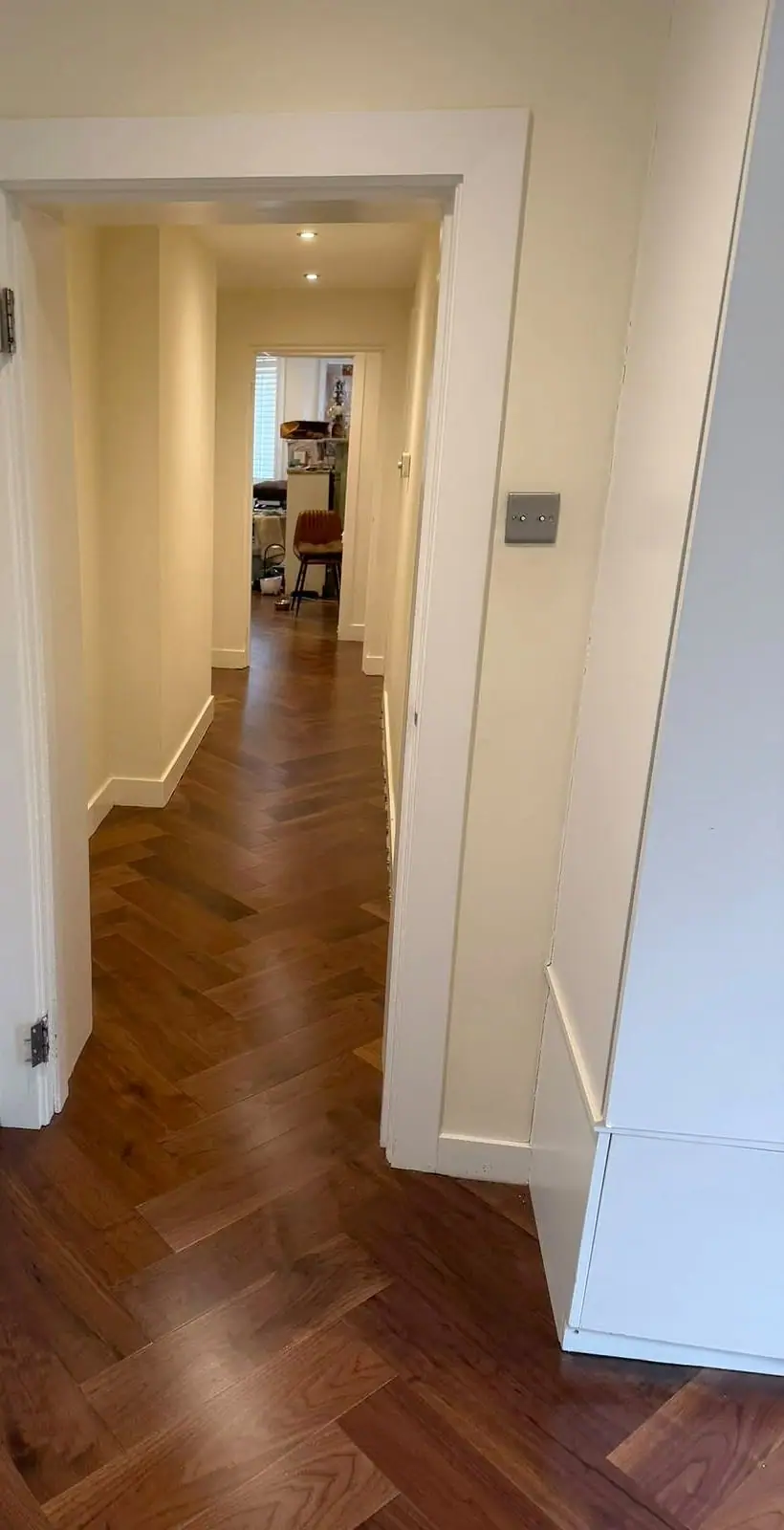
Walnut herringbone along a hallway 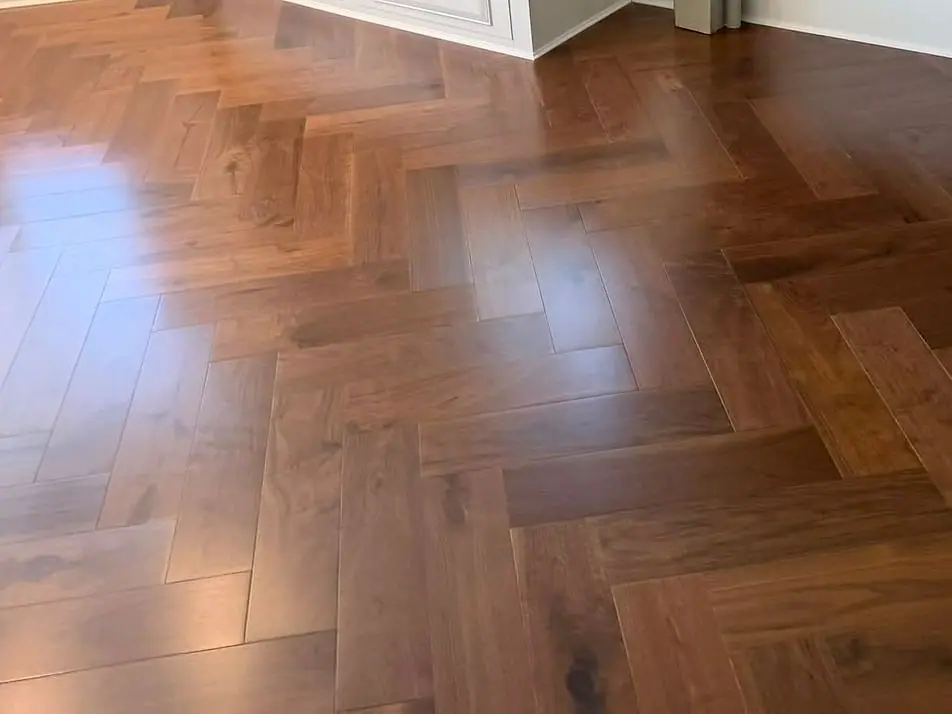
Close-up of walnut herringbone blocks 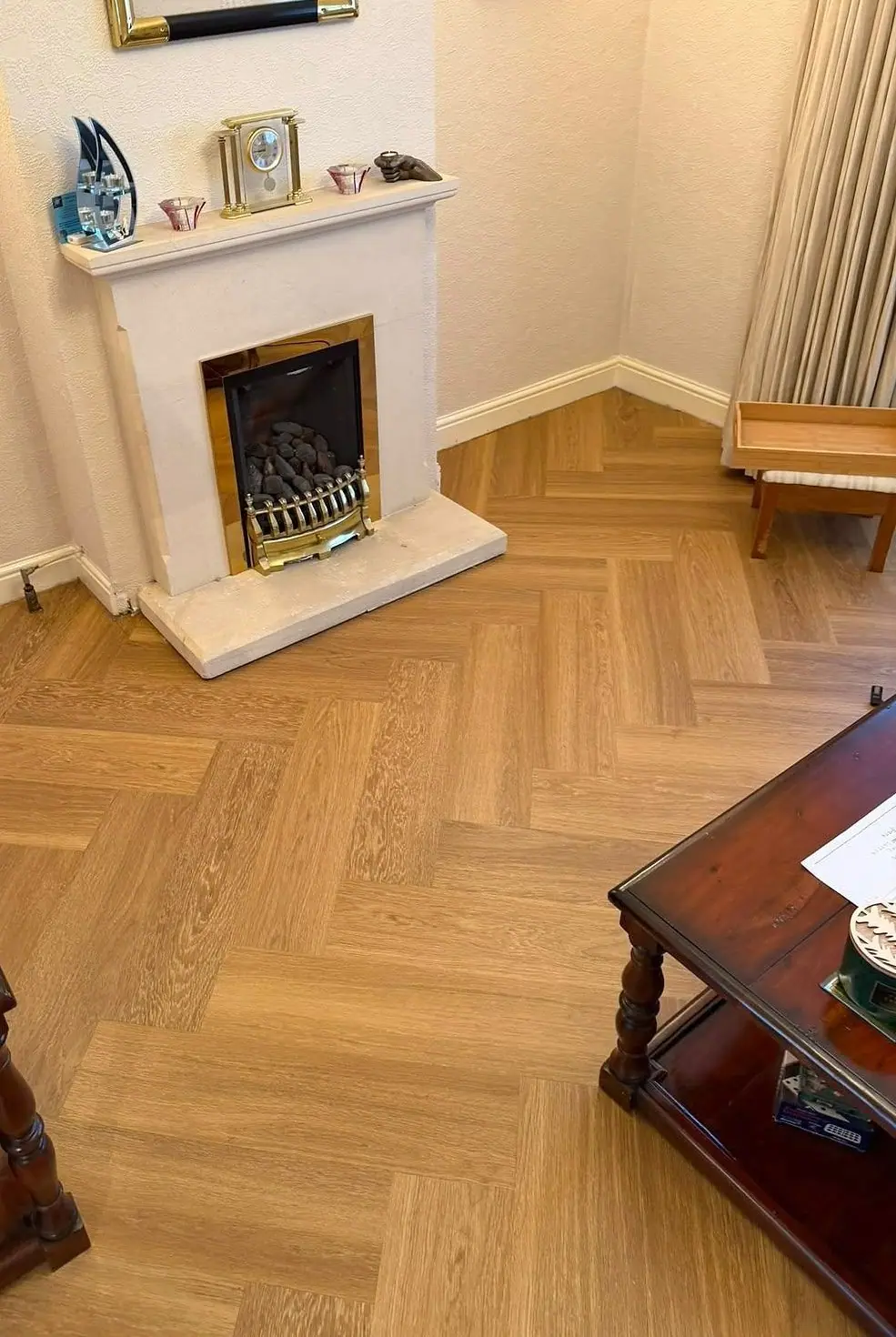
Honey-toned herringbone in a living room 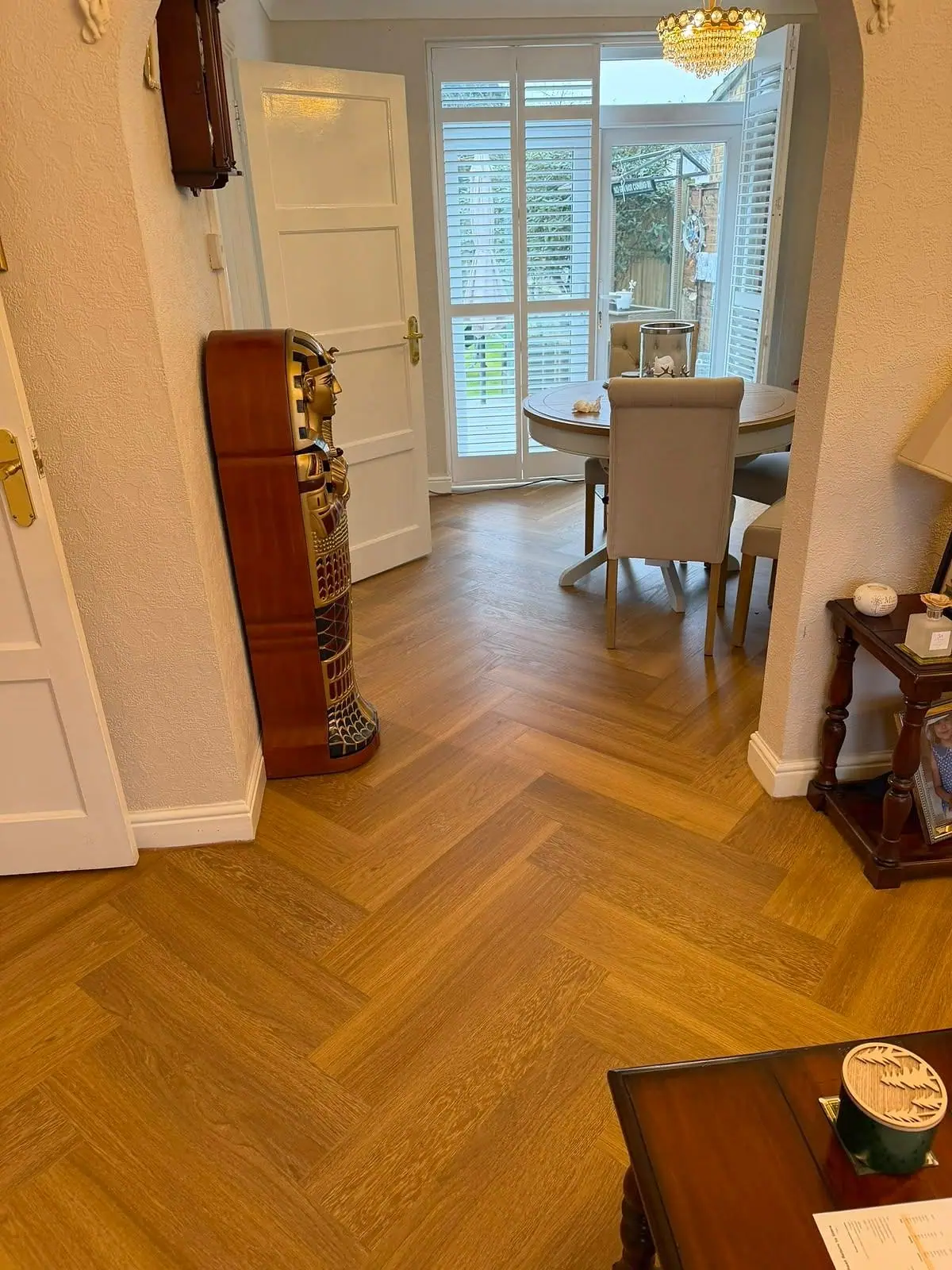
Honey-toned herringbone from hallway to dining room 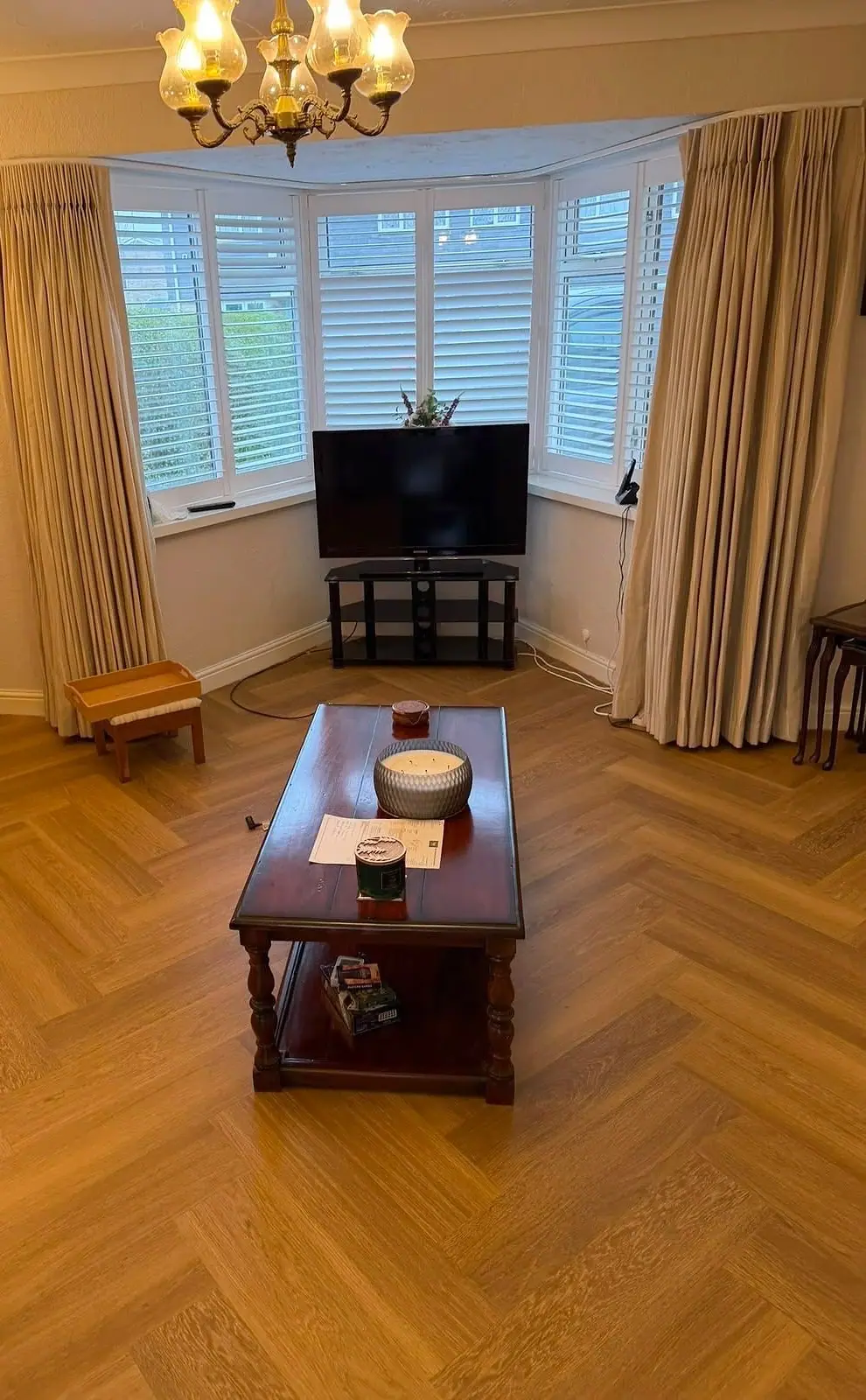
Honey-toned herringbone by a bay window


Step by step
How the job runs
Survey and plan
Before fitting day
Alex looks at the room, the subfloor (the surface under your new floor) and the doorways the pattern must run through. You agree the block size, any border and any levelling.
Prepare the base
Day 1
Glued herringbone needs a flat, clean base. Alex levels or screeds a concrete floor, or lays ply boarding over a timber one, and the base must be dry enough before anything is glued down.
Set out the pattern
Day 1 or 2
Alex marks a centre line, lays the first rows without glue and checks them against the walls and doorways, moving the layout until the cuts at both sides come out even.
Lay the main floor
Day 2
Blocks are bedded in adhesive row by row, working out from the centre line. A single room often takes a day or two for this stage, and larger rooms take longer.
Border, edges and finish
Last day
Edge blocks are cut one at a time, any border goes in, and a small movement gap at the walls is covered by a trim. The floor is checked and the room cleared.
Is herringbone flooring glued down?
Herringbone blocks are usually glued down to a flat base. Floating them (laid loose over an underlay) is less common, though some click herringbone products exist, and the maker's instructions say how each is fitted.
Glue puts the whole job on the base, so it must be flat and clean. A concrete or screed floor must also be dry enough before anything is glued to it, and the floor maker's instructions set the limit.
What size herringbone blocks suit my room?
Smaller blocks suit narrow or small rooms, and larger blocks suit big open ones. Wood blocks run from roughly 70 mm wide and 280 mm long up to about 120 mm by 600 mm.
A narrow terrace hallway usually looks best with a small block and a pattern running down its length. A big open room can carry a larger block, and a border of straight boards or a row of blocks round the edge frames it. In a flat, check your lease for floor noise rules before you order.
How is herringbone set out so it runs straight?
It is set out from a centre line, not from a wall. Walls are rarely straight, so a line marked on the floor gives the pattern a true edge to grow from.
Alex adjusts the dry layout so the pattern carries through each doorway on the same line and the cut blocks at both sides match. Doing this before any glue goes down stops the pattern drifting across the room.
Herringbone or straight planks?
Herringbone is right if you want the floor to be a feature in its own right, in a hallway, a living room or an open-plan space. It takes longer than long boards, because there are far more pieces and every edge block is cut.
Straight planks suit a calmer look, a quicker job or a large floor with less cutting. They can also forgive a little more from the base. Engineered wood planks are a popular middle ground.
See engineered wood flooringWhat affects the cost of herringbone flooring?
- Wood, LVT or laminate, and the quality of the product
- Block size, since smaller blocks mean more pieces to lay
- Room size and shape, including how many doorways and edges need cutting
- Whether the base needs levelling, screeding or ply boarding first
- A border, or a pattern that continues through several rooms
How to look after a herringbone floor
Keep off the new floor for as long as the adhesive maker advises. Felt pads under furniture and a doormat at the front door protect the surface.
Sweep or vacuum with a soft brush head and wipe spills quickly. Use the cleaner the floor maker recommends, and avoid steam mops on wood and laminate.
Mistakes to avoid
- Starting from a wall instead of a centre line, so the pattern drifts and meets the doorway crooked.
- Gluing blocks to a base that is uneven or not dry enough, which shows as lipped blocks or lifting.
- Skipping the settling time the maker asks for before wood is fitted.
- Ordering too little, when herringbone wastes more at the edges and needs extra blocks.
- Buying chevron blocks when you wanted herringbone, or the other way round.
Common questions
Herringbone flooring: common questions
How long does it take to fit a herringbone floor?
Herringbone takes longer than straight planks, often a few days for one room, because there are far more pieces and every edge block is cut individually. Base preparation, room size and the number of doorways all affect the time. Alex gives you a realistic timeframe with his free estimate.
Is herringbone dearer to fit than straight planks?
Usually, yes. Herringbone blocks are small, so there are many more pieces to lay, and every edge block is cut individually. The blocks themselves can also cost more than long boards. The size of the difference depends on your room, so ask Alex for a free estimate.
Can herringbone be fitted in LVT or laminate instead of wood?
Yes. Herringbone is made in wood, LVT and laminate, and Alex fits all three. Wood has a real timber surface, LVT copes best with spills and busy rooms, and laminate is a hard-wearing choice for dry rooms. Some products click together and others are glued, so the maker's instructions decide how yours is fitted.
What is the difference between herringbone and chevron?
In herringbone the blocks have square ends and meet at a right angle, giving a broken zig-zag. Chevron blocks have angled ends, so they meet to form a continuous V. The two look different and are cut differently, so check the product is the pattern you want before you order.
Can herringbone go over underfloor heating?
Often, yes, but not every product suits it. Check that the wood, LVT or laminate you choose is made for underfloor heating, and follow the maker's instructions on heating temperatures before and after fitting. Engineered wood is generally steadier than solid wood over heat.


Free estimate
Get a free quote
Tell Alex about the job and get one clear, written price. Free, and no obligation.