


Wood and hardwood floor fitter in Twickenham and London
Alex supplies and fits solid hardwood and engineered wood floors in Twickenham and across London, in planks, herringbone and parquet, for homes and businesses.
9.97/10 from 118 Checkatrade reviews (opens in a new tab)Wood flooring with Alex
A wood floor can last for decades, but the right one depends on the room and on what lies underneath. Alex is a wood flooring installer and supplier, so he can help you choose the boards and then fit them.
This page covers the basics: solid or engineered, planks or pattern, which rooms suit wood, and the base it goes on. Herringbone and engineered boards have their own pages for the detail. Send Alex a few photos and he'll tell you what your floor needs.
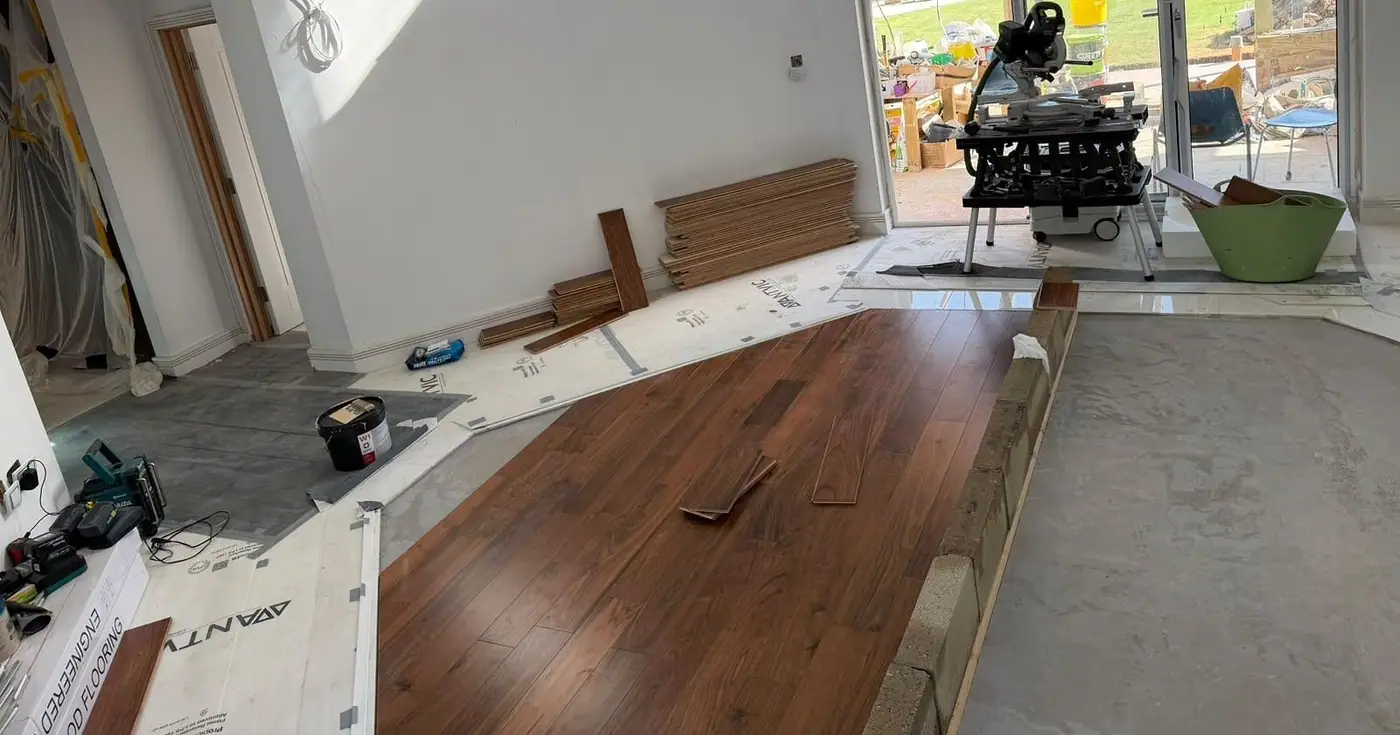
Wide walnut boards going down in a large, bright room 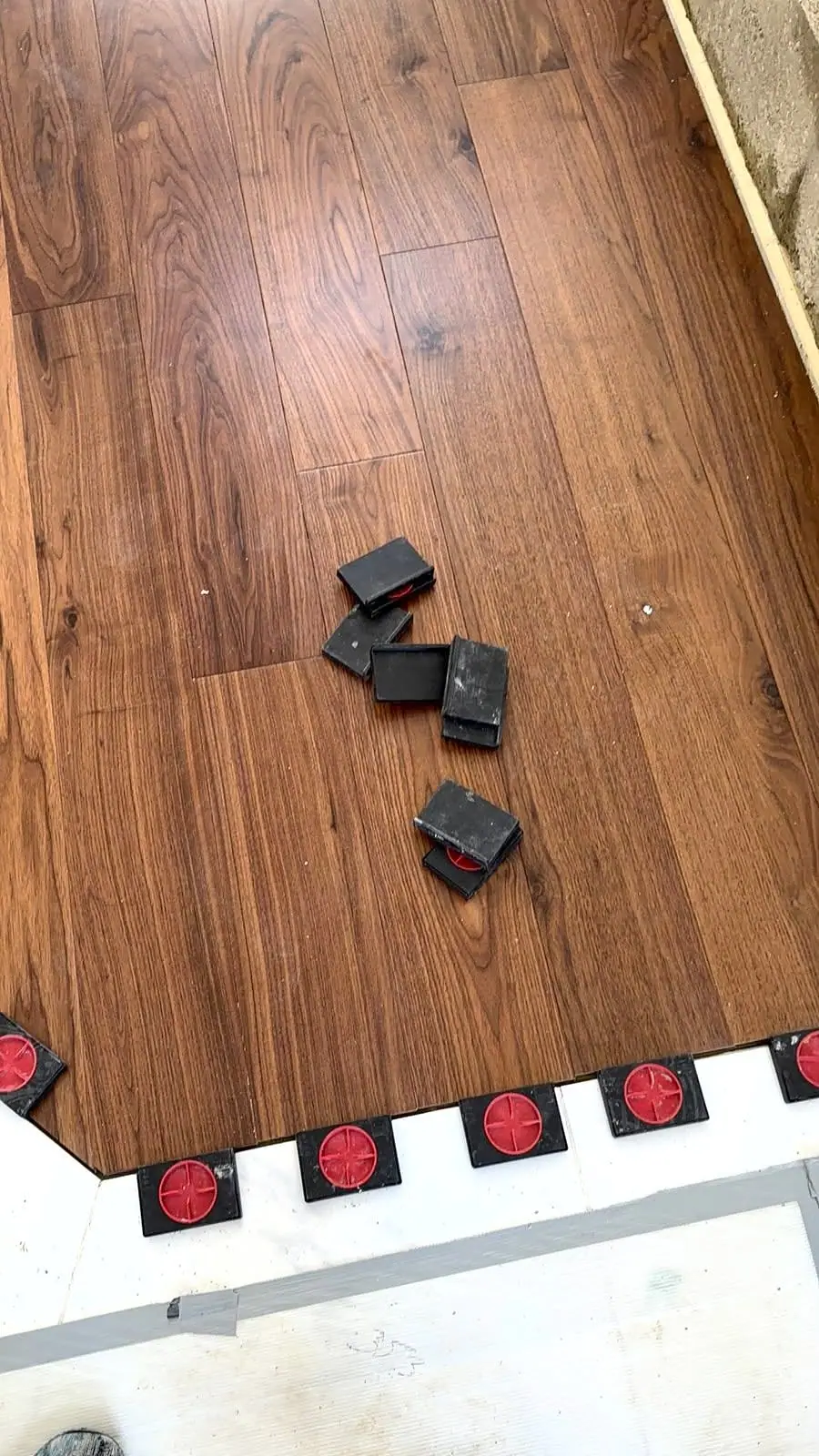
Walnut boards part-way through fitting 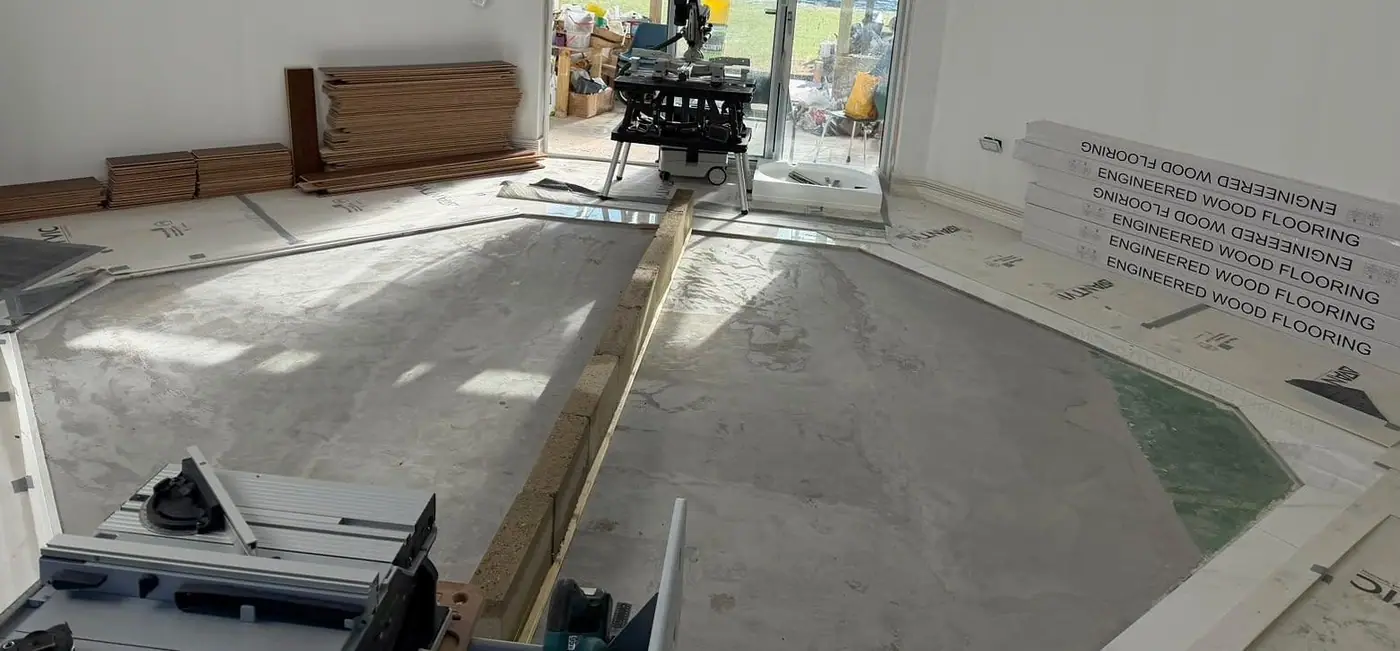
Cleared concrete base with engineered wood ready to fit


Step by step
How the job runs
Choose the floor
Before fitting day
Tell Alex about the room and the look you want. He can supply the boards, underlay and trims, and give you a free estimate.
Check the base
Before fitting day
Alex looks at what the wood will go on. Anything uneven is levelled first, and concrete or screed must be dry enough for the floor you chose.
Let the boards settle
Days before fitting
The boards are stored in the room they will be fitted in, so they adjust to its temperature and humidity. The floor maker's instructions give the time.
Set out and fit
Fitting days
Alex plans the layout so the floor looks balanced at doors and walls, then fixes the boards as the product allows, leaving a gap at every wall.
Finish the edges
Last day
Scotia, beading or threshold trims cover the gaps. Alex checks the floor and leaves the room tidy.
Solid wood or engineered wood: which is better?
Neither is better everywhere. Solid wood is one piece of timber all the way through, while engineered wood has a real wood top layer on a layered core that moves less with heat and humidity.
Engineered is usually the safer choice over underfloor heating or concrete. Solid suits a dry, steady room on a sound base. Either can be planks or a pattern such as herringbone or parquet, which is small blocks laid in a repeating design.
Which wood floor suits a kitchen, hallway or room with underfloor heating?
Engineered wood is usually the better fit for a kitchen or a heated floor, because its layered core copes better with heat and changing humidity. A hallway suits a hard-wearing board and a good doormat.
Wood and standing water don't mix, so wipe up kitchen spills quickly. Over underfloor heating, floor makers set limits on board thickness and surface temperature, and ask for the heating to be brought up slowly. The engineered wood flooring page covers heated floors in more detail.
What can a wood floor be fitted on?
Wood can go on level concrete, a screed (a smooth layer of cement-based mix), sound floorboards or ply (plywood sheets). The base needs to be flat, firm and dry.
Concrete and screed must be dry enough before wood goes down, and the floor maker's instructions set the limit. Alex levels or screeds an uneven floor first, and can cover worn floorboards with ply.
Wood, laminate or LVT for a busy kitchen or a home with dogs?
Wood is right when you want a floor that feels warm underfoot and lasts. With dogs, claws will mark it over time. In a kitchen, wood needs spills wiped up promptly.
LVT (luxury vinyl tiles) is vinyl all the way through, so spills and wet paws won't harm it, and it is softer and quieter underfoot. For a kitchen splashed daily or a muddy back door, LVT is often more practical. Laminate is hard-wearing too, but water at the joints can swell it.
See LVT and vinyl tilesWhat affects the cost of fitting a wood floor?
- Solid or engineered, and the grade and thickness of the board
- Planks or a pattern: herringbone and parquet take longer to lay
- The size and shape of the room, and how many cuts it needs
- The condition of the base, and whether it needs levelling, screeding or ply first
- The underlay, such as acoustic underlay for a flat
How to look after a wood floor
Put felt pads under furniture legs and a doormat at outside doors. Keep dogs' claws trimmed, and wipe up spills rather than leaving them to soak in.
Clean with a soft brush or vacuum and a lightly damp mop, using a cleaner made for wood floors. Don't use a steam mop.
Mistakes to avoid
- Buying boards before checking what your lease, or the underfloor heating maker, requires.
- Fitting boards the day they arrive, with no time to settle in the room.
- Laying wood on a concrete or screed floor that is not dry enough yet.
- Leaving no gap at the walls, so the floor has no room to move and may lift.
Common questions
Wood flooring: common questions
Can Alex supply the wood flooring as well as fit it?
Yes. Alex is listed on Checkatrade as both a wood flooring installer and a wood flooring supplier, so he can supply the boards, underlay and trims and fit them. Tell him about the room, whether you prefer solid or engineered, and planks or a pattern, and he will help you choose. Estimates are free.
How long should wood flooring sit in the room before it is fitted?
Boards need to settle in the room they will be fitted in, so they adjust to its temperature and humidity before they are fixed down. The time depends on the board and the room, so follow the floor maker's instructions. Store the packs flat, and keep the room at its normal temperature.
How long does it take to fit a wood floor?
It depends on the size of the room, the boards and the base. Straight planks go down faster than a pattern such as herringbone or parquet, and a base that needs levelling or ply boarding adds time before the floor goes down. Alex gives you a realistic timeframe with his free estimate.
Is acoustic underlay needed for a wood floor in a flat?
Often, yes. Many leases for flats above other homes require acoustic underlay, a layer that reduces noise passing to the neighbours below, or a minimum sound rating. Check your lease before buying boards, and tell Alex what it says so the underlay suits the floor.
Is a wood floor a good idea in a kitchen?
It can be, if spills are wiped up quickly and water is not left standing. Engineered wood copes better with changes in humidity than solid. If the kitchen sees a lot of water, mud or dogs, LVT is often the more practical floor.
What does a wood floor need underneath it?
A flat, firm, dry base: level concrete, a screed, sound floorboards or ply. Concrete and screed must be dry enough before wood goes down, and the floor maker's instructions set the limit. Alex can level or screed an uneven floor first, or cover worn floorboards with ply.

Free estimate
Get a free quote
Tell Alex about the job and get one clear, written price. Free, and no obligation.